
Recycled Metal Roofs for Carbon Neutral Goals by 2026
Choosing a roofing material ranks among the most important decisions for any property owner. The selection influences appearance, ongoing expenses, and environmental impact. Recycled metal roofing provides a direct route to carbon neutral targets through durability, energy performance, and material reuse.
A clear plan removes uncertainty from the replacement process. Property owners gain practical advantages by focusing on verified steps that deliver measurable results.
Evaluate Long Term Durability Benefits
Metal panels produced from reclaimed stock retain strength through multiple reuse cycles. A correctly installed system often exceeds forty years of service with only routine attention. This extended lifespan reduces the frequency of manufacturing cycles and associated emissions compared with shorter lived alternatives.
Fewer replacements mean lower cumulative energy use and reduced landfill contributions. Owners who select this option establish a stable foundation for sustained carbon reductions.
Enhance Efficiency Using Reflective Surfaces
Metal naturally reflects solar radiation. Application of a tested reflective coating increases this effect and lowers attic temperatures during warm months. Reduced cooling loads decrease electricity demand and the emissions tied to power generation.
The coating also protects the metal surface, extending service life while supporting efficiency targets. This single upgrade multiplies the environmental return of the recycled material.
Ensure Adequate Insulation and Airflow
Effective thermal performance requires both insulation and ventilation beneath the panels. A continuous ventilation gap prevents heat buildup in summer and moisture accumulation in winter. High performance insulation further limits heat transfer through the roof assembly.
These measures stabilize indoor temperatures and reduce the workload on heating and cooling equipment. The resulting energy savings contribute directly to carbon neutral objectives.
Select Certified Material Providers
Verification of recycled content and production standards protects the integrity of the project. Recognized certifications document the percentage of reclaimed material and adherence to responsible manufacturing practices. Working with transparent suppliers reinforces the overall reduction in embodied carbon.
This step also supports broader industry movement toward cleaner production methods.
Engage Skilled Installation Professionals
Precision installation protects the performance of any metal system. Experienced contractors manage seams, flashing, and fasteners to prevent leaks and distortion. They also track scrap during removal and direct leftover metal to recycling streams.
Owners should request references specific to recycled products and confirm the contractor follows documented waste handling procedures.
Calculate Overall Investment Returns
Initial material and labor costs exceed those of conventional shingles. Long term reductions in maintenance, replacement frequency, and energy use offset the difference within a decade for most properties. Market data show that certified sustainable features increase resale value as buyer interest grows.
The combination of operational savings and asset appreciation makes the choice financially sound.
Handle Existing Material Disposal
Responsible removal of the old roof closes the material loop. Many contractors coordinate with facilities that process asphalt into paving aggregate and return metal to smelters. Planning this step before work begins prevents mixed waste and unnecessary landfill use.
Even non metal roofing components find secondary applications when sorted correctly.
Combine with Renewable Energy Systems
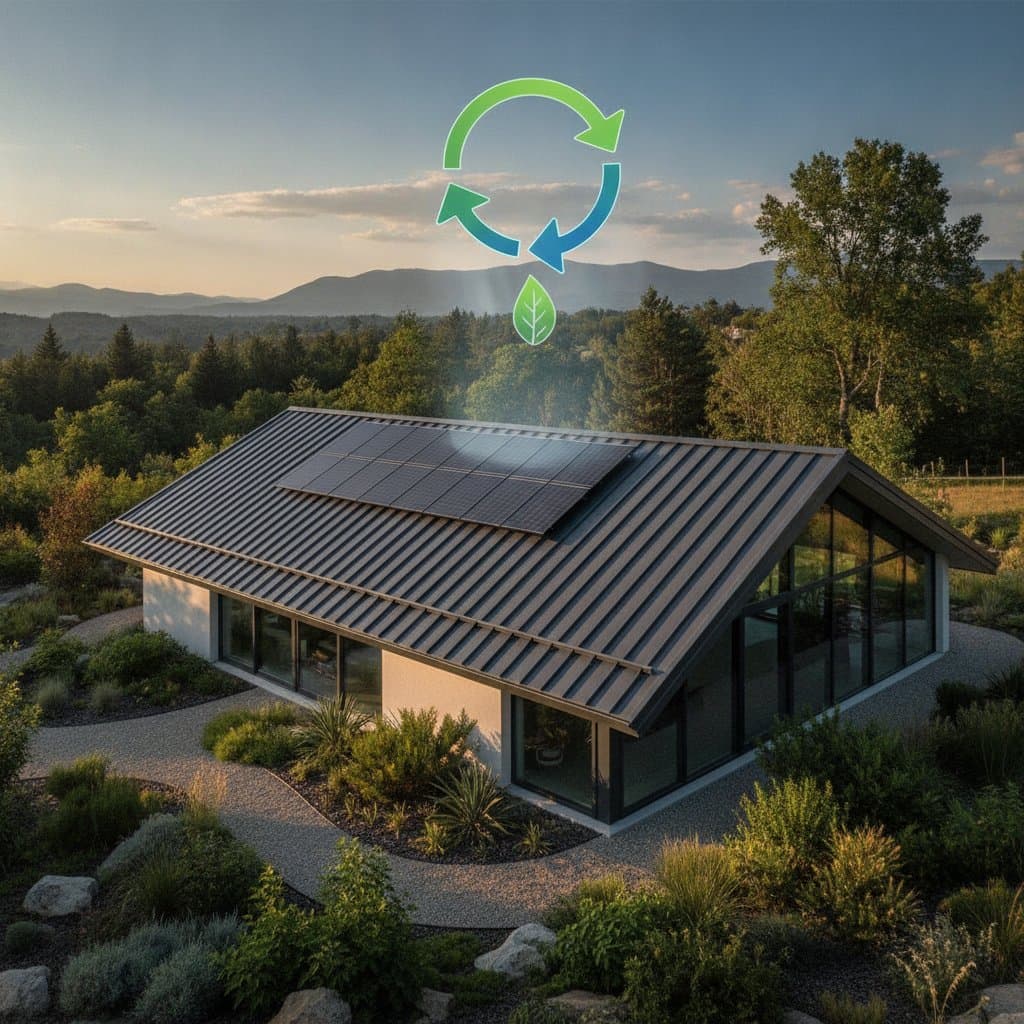
Metal roofs provide an excellent substrate for solar arrays because they accommodate attachment hardware without numerous penetrations. The stable surface and long warranty periods align with the service life of photovoltaic modules. On site generation further lowers grid dependence and accelerates progress toward carbon neutrality.
Perform Routine Upkeep
Periodic inspection preserves coating integrity and prevents debris accumulation. Clearing gutters, tightening exposed fasteners, and removing organic matter maintain both appearance and thermal performance. These modest tasks protect the original efficiency gains over decades.
Monitor Energy and Emission Metrics
Utility records and basic monitoring devices reveal the actual impact of the new roof. Tracking monthly consumption highlights additional opportunities for efficiency improvements elsewhere in the building. Consistent measurement confirms that the roofing investment continues to deliver intended environmental benefits.
Establishing a Resilient Property Standard
A recycled metal roof integrates material reuse, energy conservation, and structural longevity into one system. Owners who follow the outlined sequence achieve measurable progress toward carbon neutral targets while enhancing daily comfort and long term asset value.