
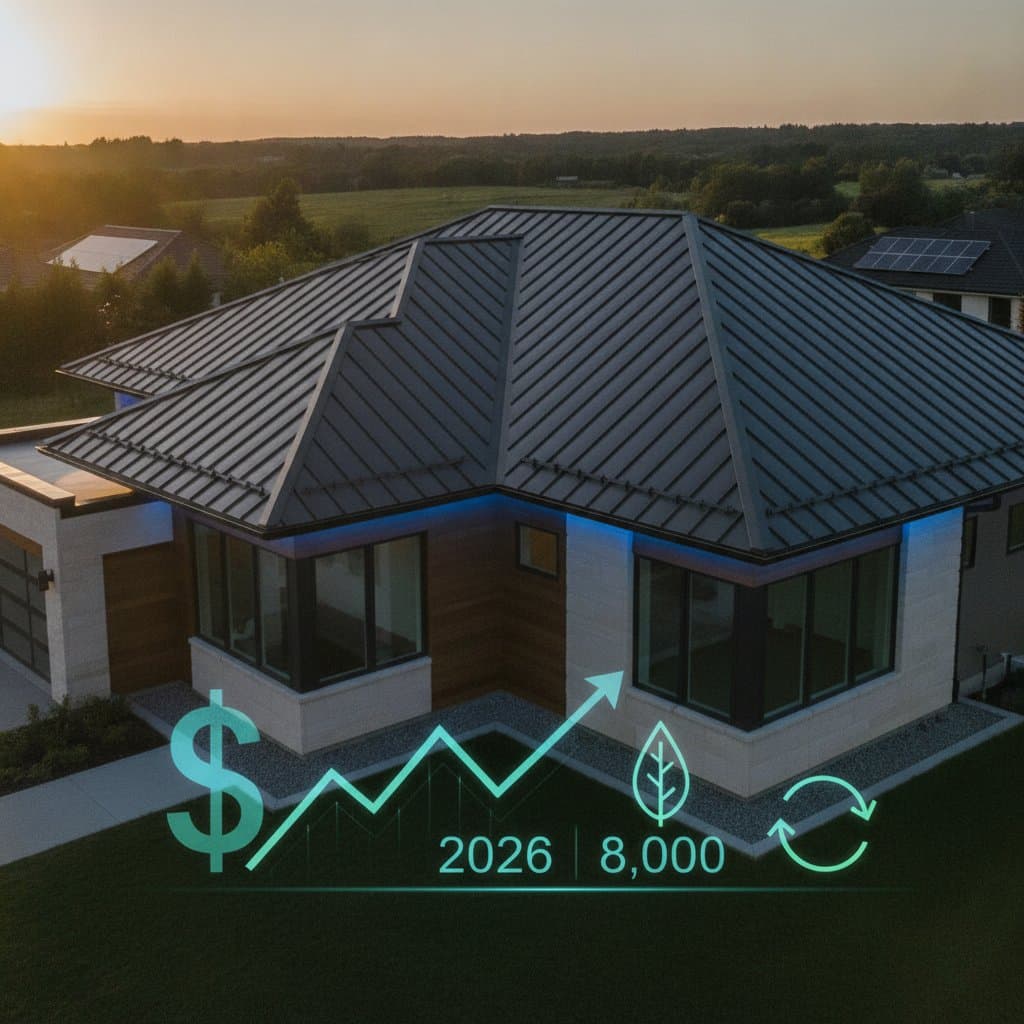
Claim Up to $8000 in 2026 Tax Credits for Recycled Metal Roofs
Homeowners who install recycled metal roofing can reduce their tax bill by as much as $8000 through the 2026 energy efficiency credit. This option lowers monthly energy costs, extends roof life, and raises property value at the same time. The following steps show exactly how to confirm eligibility, gather records, and complete the claim.
Verify That Materials Meet Credit Standards
Recycled metal roofing qualifies only when it contains a documented percentage of post consumer content and carries a solar reflectance rating. Request the manufacturer certification statement and product data sheet before signing any contract. These documents list the exact recycled content and confirm that the finish meets reflectance thresholds required by the credit program.
Store every invoice, label, and specification sheet in one folder. Separate material costs from labor costs on the invoice, because only the material portion applies to the credit calculation.
Estimate Total Savings Before Installation
A $30000 roofing project can drop to an effective cost of $22000 after the maximum credit. Reflective metal surfaces also cut summer cooling loads by up to 25 percent, according to Department of Energy studies. Because metal roofs last two to three times longer than asphalt shingles, owners avoid two or more future replacements.
Add any local utility rebates or low interest loans to the calculation. These incentives further reduce the net outlay and improve cash flow during the first year.
Assemble Complete Documentation
Successful claims rest on three core records. The manufacturer certification statement proves recycled content. The detailed invoice isolates qualifying material costs. Product specifications list reflectance values and recycled percentages.
Retain copies of all emails and change orders with the contractor. Organized files speed filing and protect against audit questions.
Submit the Credit on Your Tax Return
Use the designated energy efficient home improvement form attached to your federal return. File in the same calendar year the roof is installed. Professional preparers need the full document set at least two weeks before the filing deadline.
Double check arithmetic and form codes before submission. Small omissions commonly delay refunds or reduce the approved amount.
Recognize Environmental Gains
Recycled metal diverts material from landfills and requires far less energy to produce than virgin metal. Installation over existing shingles eliminates tear off waste in many cases. Reflective surfaces also lower neighborhood heat retention, which reduces overall cooling demand across the community.
Strengthen Year Round Energy Performance
The same reflective coating that qualifies for the credit keeps attics cooler in summer. Pairing the roof with added insulation or a radiant barrier increases the effect. In winter, proper underlayment systems limit heat loss and reduce furnace runtime.
Lower equipment strain extends the service life of air conditioners and furnaces, trimming replacement expenses over time.
Raise Market Value and Buyer Interest
Certified energy efficient roofs appear on appraisal reports and attract buyers who prioritize lower utility costs. The clean lines of standing seam metal improve curb appeal without added ornamentation. Even owners who stay in place benefit from the higher assessed value for insurance and resale calculations.
Arrange Upfront Financing
Home equity lines, contractor financing, and specialized energy loans cover the initial outlay. Compare interest rates and repayment schedules against the expected tax refund timing. Some municipalities offer additional grants that stack with the federal credit.
Protect the Roof With Routine Care
Inspect the surface twice each year for debris and loose fasteners. Clear gutters after storms to maintain drainage. Clean reflective coatings with mild soap and water only. Prompt attention to minor scratches prevents corrosion and preserves the energy performance that supports the credit.